

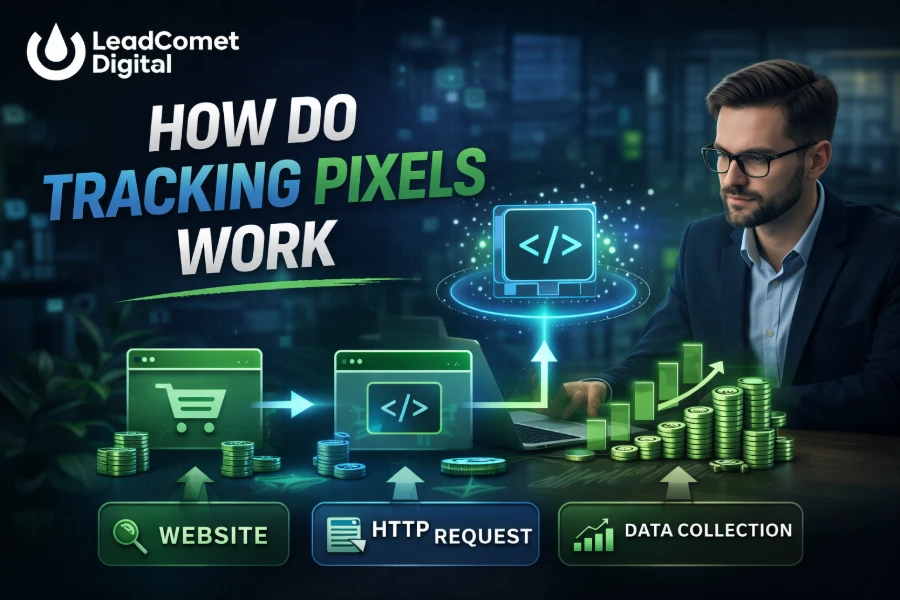
How tracking pixels work can completely change how you view online marketing, emails, and ads you see every day. These tiny, invisible tools quietly collect valuable data that businesses use to improve your experience and refine their campaigns. Once you grasp how they function, you will better understand how digital tracking shapes modern marketing.
In this guide, you will learn what tracking pixels are, how they work behind the scenes, why businesses rely on them, and how they differ from cookies. By the end, you will have a clear, practical understanding of how tracking pixels influence your online interactions.
What Is A Tracking Pixel
A tracking pixel is a tiny, invisible image embedded in a webpage, email, or advertisement that helps collect user data. When you load a page or open an email, the pixel automatically sends a request to a server, which records your activity. This process happens instantly and remains completely invisible to you.
You might not notice tracking pixels, but they play a significant role in modern digital marketing strategies. Businesses use them to track engagement, measure performance, and understand how users interact with their content. Without pixels, marketers would struggle to gather accurate real-time data.
Tracking pixels are often just one pixel in size and transparent, making them impossible to detect visually. Despite their simplicity, they provide powerful insights that help businesses optimize campaigns and improve user experiences.
How Tracking Pixels Work Step By Step
Tracking pixels work through a simple but highly effective process that involves your browser and a remote server. When you visit a page or open an email, your browser loads all elements, including the hidden pixel. This action triggers a request to the server that hosts the pixel.
Once the request is made, the server collects data about your interaction. This can include your IP address, device type, browser details, time of access, and sometimes your location. All of this happens within milliseconds without interrupting your experience.
The collected data is then stored and analyzed to provide insights into user behavior. Businesses use this information to understand trends, measure engagement, and improve marketing performance.
What Data Tracking Pixels Collect
Tracking pixels collect various types of data that help businesses better understand user behavior. While they do not store data directly on your device like cookies do, they gather information via server requests. This makes them highly valuable for real-time tracking.
Some of the most common data collected include:
- IP address and approximate location
- Device type and operating system
- Browser type and version
- Time and date of interaction
- Pages visited or emails opened
This information helps businesses build a clearer picture of how users interact with their content. By analyzing these insights, they can make smarter decisions that improve marketing outcomes.
Why Businesses Use Tracking Pixels
Businesses rely on tracking pixels because they provide accurate and actionable data. Without this data, it would be difficult to measure campaign success or understand user behavior. Pixels help bridge the gap between marketing efforts and real results.
One of the biggest benefits is the ability to track conversions. Businesses can see when a user completes an action, such as making a purchase or signing up for a service. This allows them to evaluate the effectiveness of their campaigns.
Tracking pixels also help improve personalization. By understanding user preferences and behaviors, businesses can deliver more relevant content and advertisements.
Tracking Pixels In Email Marketing
Tracking pixels play a crucial role in email marketing by measuring engagement. When you open an email, the pixel loads and sends a signal back to the sender. This allows marketers to track open rates and understand how recipients interact with their emails.
This data helps businesses refine their email strategies. They can identify which subject lines perform best and which types of content resonate with their audience. Over time, this leads to more effective communication.
Email tracking pixels also support A/B testing. Marketers can test different email variations and determine which performs better based on user engagement.
Tracking Pixels In Online Advertising
Tracking pixels are widely used in online advertising to measure performance and optimize campaigns. When you click on an ad or visit a website, the pixel tracks your actions and sends data back to the advertiser. This helps determine whether the campaign is successful.
One of the most important uses is retargeting. If you visit a website but do not make a purchase, tracking pixels allow advertisers to show you relevant ads later. This increases the chances of conversion.
Pixels also help advertisers understand which ads generate the most engagement. With this data, they can adjust their strategies and improve return on investment.
Tracking Pixels Vs Cookies
Tracking pixels and cookies are often confused, but they work differently. Cookies store data directly on your device, while tracking pixels send information to a server when a page loads. Both are used for tracking, but they serve different purposes.
Cookies are commonly used for remembering login details and user preferences. They help improve your browsing experience by storing information locally. However, users can delete or block them.
Tracking pixels, on the other hand, are harder to detect and do not rely on local storage. This makes them useful for cross-device tracking and real-time data collection.
Advantages Of Tracking Pixels
Tracking pixels offer several advantages that make them essential for digital marketing. They provide accurate data that helps businesses make informed decisions. This leads to better campaign performance and improved user experiences.
One major advantage is real-time tracking. Businesses can instantly see how users interact with their content and adjust strategies accordingly. This flexibility is crucial in fast-moving digital environments.
Another benefit is cross-platform tracking. Pixels can track users across different devices and platforms, providing a more complete view of customer behavior.
Privacy Concerns Around Tracking Pixels
Despite their benefits, tracking pixels raise important privacy concerns. Because they operate invisibly, users are often unaware that their data is being collected. This has led to increased scrutiny and regulatory attention.
Many privacy advocates argue that tracking pixels can collect sensitive information without explicit consent. This has prompted the introduction of laws requiring transparency and user consent.
Businesses must now ensure compliance with regulations by informing users about their tracking practices. Providing clear privacy policies and obtaining consent are essential.
Legal Requirements For Using Tracking Pixels
Using tracking pixels comes with legal responsibilities, especially in regions with strict privacy laws. Businesses must disclose how they collect and use data. This ensures transparency and builds trust with users.
In many cases, users must give consent before tracking pixels can be activated. This is particularly important under regulations like GDPR and similar frameworks. Failure to comply can result in penalties.
Businesses should also provide users with the option to opt out of tracking. This helps maintain ethical practices while respecting user privacy.
Common Types Of Tracking Pixels
There are different types of tracking pixels, each designed for specific purposes. Understanding these types helps you see how they are used in various marketing strategies. Each type serves a unique function.
The most common types include:
- Conversion pixels for tracking completed actions
- Retargeting pixels for advertising follow-ups
- Analytics pixels for measuring user behavior
- Email pixels for tracking open rates
Each type plays a role in improving marketing performance. Together, they provide a comprehensive view of user interactions.
How Tracking Pixels Improve Marketing Strategy
Tracking pixels help businesses refine their marketing strategies by providing actionable insights. Tools like Viiewerr can also help users better understand digital activity and online engagement patterns. With accurate data, marketers can identify what works and what does not. This leads to better decision-making.
By analyzing user behavior, businesses can optimize their content and campaigns. Platforms like Vieweno also demonstrate how understanding digital interactions can help improve online visibility and user experiences.
Tracking pixels also support data-driven marketing. Instead of relying on guesswork, businesses can use real evidence to guide their actions.
Are Tracking Pixels Still Relevant Today
Tracking pixels remain highly relevant despite changes in privacy regulations and technology. As third-party cookies become less reliable, pixels continue to provide valuable tracking capabilities. They are evolving to meet new challenges.
Modern tracking strategies often combine pixels with first-party data. This approach helps businesses maintain accuracy while respecting user privacy.
As digital marketing continues to grow, tracking pixels will remain a key tool for understanding user behavior and improving performance.
Conclusion
Tracking pixels may be small and invisible, but their impact on digital marketing is enormous. They allow businesses to track user behavior, measure campaign success, and deliver more personalized experiences. Without them, modern marketing would lack the data needed to make informed decisions.
As you navigate the online world, understanding how tracking pixels work gives you valuable insight into how your data is used. While they offer clear benefits for businesses, they also highlight the importance of privacy and transparency. By staying informed, you can better manage your digital experience while appreciating the role these tools play in shaping it.